(Reading time: 8 mins)
Artificial intelligence and the Internet of Things are changing logistics faster than many small businesses realize. What used to require manual tracking, phone calls and spreadsheets is increasingly being handled through connected systems that can monitor shipments, predict problems and support faster decisions.
For startups, this does not mean you need to invest in an expensive AI system or build your own technology. The more important question is how these developments will change the logistics services and tools you use over the next few years.
From Tracking What Happened to Predicting What Will Happen
Traditional shipment tracking answers a simple question: Where is my shipment? New logistics technology is moving toward a more useful question: What is likely to happen next?
AI can analyze information from carriers, routes, weather, traffic, historical shipments and other data to identify potential delays or recommend alternative solutions. Predictive analytics can help businesses anticipate demand, plan transport capacity and identify potential disruptions before they become major problems. AI-driven transport planning, forecasting and shipment visibility are already among the main areas where logistics companies and shippers are applying AI.
For a startup, this could mean receiving an earlier warning that a shipment is likely to arrive late rather than finding out when the original delivery date has already passed.
IoT Makes the Shipment More Visible
AI is only as useful as the information it receives. This is where the Internet of Things (IoT) becomes important.
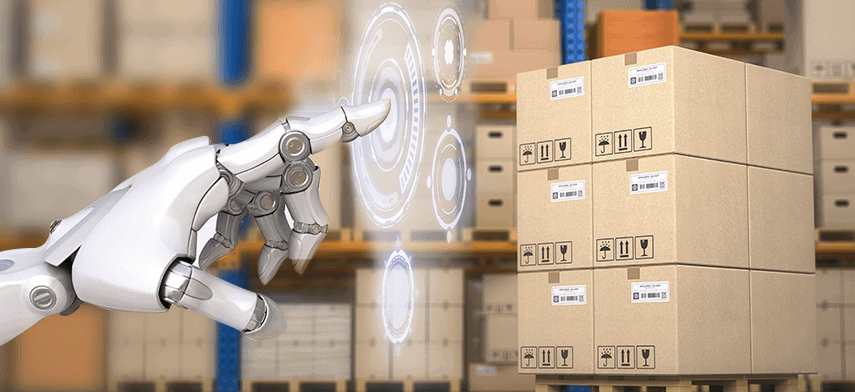
IoT devices and sensors can collect real-time information about the physical movement and condition of goods. Depending on the technology being used, businesses can monitor location, temperature, movement and other conditions while cargo is in transit. This can be particularly valuable for temperature-sensitive products, high-value goods and shipments where knowing the exact status of the cargo matters.
For example, a company shipping sensitive products may not simply want to know that the shipment is somewhere between two locations. It may need to know whether the temperature has remained within the required range throughout the journey.
AI Can Help Startups Make Better Logistics Decisions
One of the biggest advantages of AI is not necessarily automation. It is the ability to make sense of large amounts of information much faster.
A startup could eventually use AI-supported logistics systems to compare transport options, identify recurring delays, forecast demand or highlight shipments that require attention. Instead of spending hours checking different systems and contacting multiple providers, teams can increasingly rely on connected data to identify where action is needed.
This is especially relevant for growing companies. As order volumes, suppliers, destinations and logistics partners increase, managing everything manually becomes harder. Research from 2026 shows that many businesses are still working with several separate systems, while AI is increasingly being used to connect information and support proactive decision-making.
Will Small Businesses Actually Benefit?
The good news is that startups do not need enterprise-level budgets to benefit from these developments.
Many of the technologies will increasingly be built into the platforms and logistics services businesses already use. Instead of purchasing a complicated AI solution themselves, a startup may benefit because its logistics provider uses AI for route planning, forecasting, shipment visibility or exception management.
This means that when choosing logistics partners, technology capabilities may become just as relevant as traditional factors such as price, delivery times and geographic coverage.
The question is no longer simply whether a logistics provider can track your shipment. It is increasingly whether they can use the available data to help you understand and manage what happens next.
What About the Next Few Years?
There is a lot of excitement around AI in logistics, but not every futuristic prediction will become reality immediately. In 2026, the industry is still in a transition period. Gartner identifies agentic AI, physical AI, intelligent simulation and other AI-driven technologies among the major supply chain technology trends, while research from BCG shows that many logistics companies are still experimenting with AI rather than having fully integrated it into their operations.
For startups, this means there is no need to wait for a completely automated supply chain. The more realistic near-term changes are better shipment visibility, smarter route planning, improved forecasting, automated administrative tasks and earlier warnings about potential disruptions.
Over time, AI systems may move further from simply providing information to actively recommending or carrying out decisions. But human oversight will remain important, particularly when decisions involve unusual shipments, customers, regulations or unexpected disruptions.
Technology Is Not a Replacement for a Good Logistics Partner
It is easy to think of AI and IoT as replacing logistics expertise, but technology alone cannot solve every logistics problem.
A sensor can tell you that a shipment has been delayed. An AI system can identify that a problem is developing. But someone still needs to decide what to do about it, communicate with the relevant parties and find a practical solution.
For startups, this human element remains important. Technology should reduce the time spent searching for information and reacting to problems, allowing founders and operations teams to focus on decisions that actually require their attention.
What Startups Should Look For
You do not need to become a logistics technology expert to prepare for the future. Start by asking potential logistics partners how they provide shipment visibility, what information they can share, how they handle delays and whether they use technology to support forecasting, route planning or proactive problem-solving.
The most useful technology is not necessarily the most impressive technology. It is the technology that gives you better information, helps you act sooner and makes your logistics operation easier to manage.
The Future Is More Connected, Not Just More Automated
The future of logistics is unlikely to be about replacing every human decision with AI. It is more likely to be about connecting people, data, shipments and logistics providers so that everyone can make better decisions faster.
For startups, this could mean fewer surprises, better visibility and more control as their operations grow. IoT can provide a clearer picture of what is happening to the physical shipment, while AI can help turn that information into useful predictions and decisions.
The technology is developing quickly, but the goal remains simple: get the right product to the right place at the right time, with fewer surprises along the way.
For a growing startup, that is what logistics technology should ultimately deliver.